When homeowners see black streaks or green patches spreading across their roof, the instinct is often to blast them away with maximum pressure. That approach can cause more harm than the stains themselves. Understanding the difference between soft washing and pressure washing is the key to a roof that stays clean and intact for years.
What Causes Roof Stains?
Those dark streaks are usually Gloeocapsa magma, an airborne algae that feeds on the limestone filler in asphalt shingles. Green patches are moss or lichen, and in coastal Southern California, salt residue adds a gray haze. These organisms hold moisture against the roof surface, which shortens shingle life and accelerates granule loss.

Why Pressure Washing Can Damage Roofs
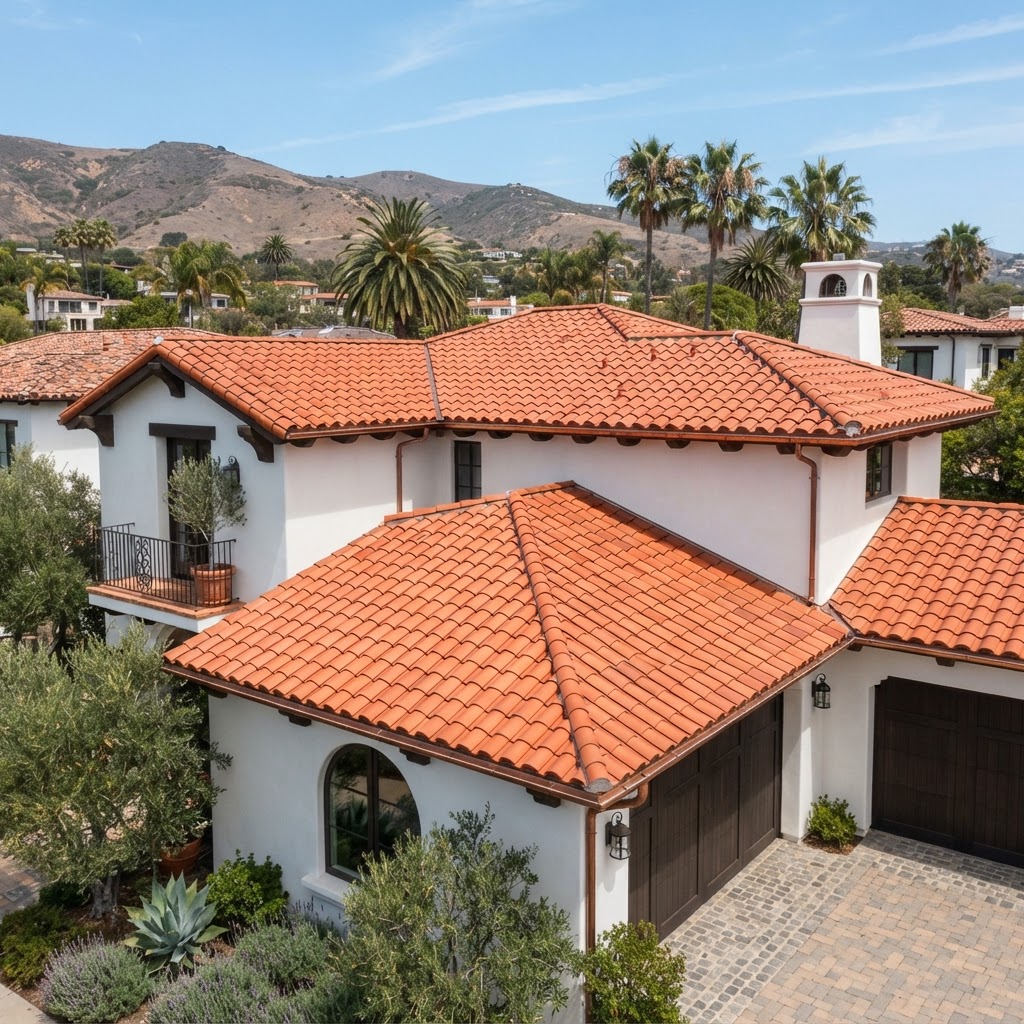
High-pressure streams strip the protective granules off asphalt shingles, leaving them exposed to UV damage and premature cracking. On tile roofs, pressure can crack glazes and force water under the tiles. The aggressive blast also does not kill the algae at the root, so the stains return within months.
The Soft Wash Advantage
Soft washing uses a low-pressure application of specialized cleaning solutions that kill algae, moss, and lichen at the source. The treatment continues working after we leave, preventing regrowth for up to two years. Because there is no high-pressure impact, the roof surface stays intact and the warranty remains valid.
- Kills organisms at the root, not just the surface stain
- No granule loss or tile cracking
- Results last 2 to 3 times longer than pressure washing
- Safe for asphalt, tile, metal, and flat roofs
When Pressure Washing Makes Sense
Pressure washing is the right tool for hard, non-porous surfaces like concrete driveways, brick walls, and some flat commercial roofs. The decision comes down to the material and the type of staining. Rhine Cleaning evaluates every roof before choosing a method, so you never get a one-size-fits-all approach that risks your property.